Biomass procurement season 2026/2027 — structuring an annual contract
April is the best window to reserve volume. July costs +8–15%. We explain how to structure an annual contract for wood chips, A2 pellet and PKS across the October–April cycle.
Why the contracting date matters more than the base price
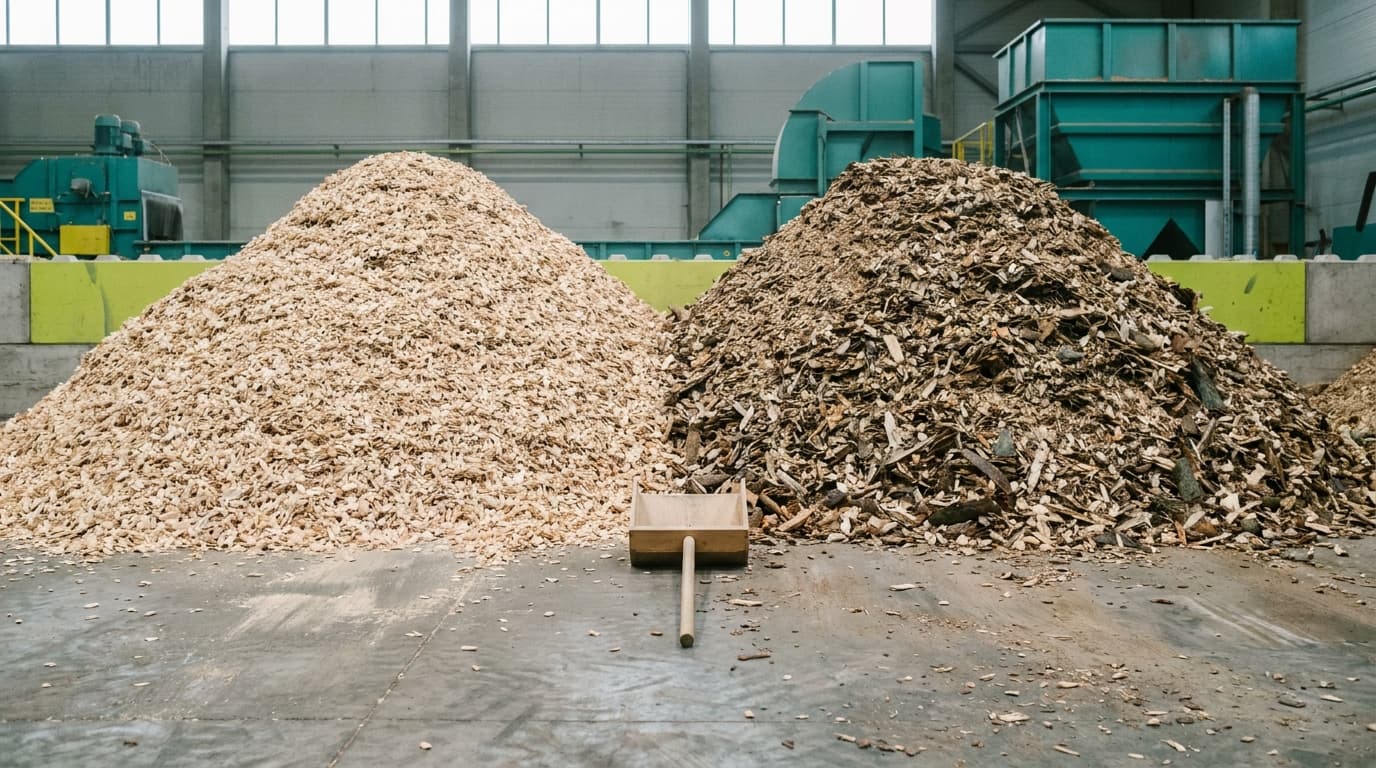
In the Polish district-heating market, the season runs from 1 October to 30 April — 7 months of boiler work on solid fuel plus a month of slack on either end. Typical demand for a municipal heating plant in central Poland: 4 000 t of bulk A2 pellet + 12 000 t of forestry chips + 3 000 t of PKS for co-firing.
A customer signing in April of the preceding year and reserving volume gets the season's base price. A customer hesitating until July — pays 8–15% more on tightening demand and seasonal supply drawdown. A customer starting the supplier search in October — pays 20–30% more and faces limited availability.
Conclusion: contracting timing matters more than the difference in prices between suppliers. We know this from the trader side, watching prices climb week over week between May and October.
Three annual contract types
There are three annual-contracting patterns we routinely see — each with a different risk profile and pricing structure.
Fixed volume, fixed price
The customer reserves a specific volume (e.g., 4 000 t A2 pellet) at a set price for the whole season. The supplier delivers on a weekly schedule; the customer pays per invoice on delivery.
Pros: full price and availability certainty. The customer knows the fuel cost for the year and plans the budget.
Cons: customer bears the risk of a mild season (they will order less than reserved but still owe for the "contracted non-delivery"). Supplier bears the risk of a sharp season (price jumps 20% mid-season while supplier ships at the lower contract price).
When: demand known to ±5%, tight operating budget, customer wants to sleep at night.
Range contract
Customer reserves volume within a range (e.g., 3 500–4 500 t A2 pellet) at a set price. Draws between min and max on the weekly schedule. Above max — market-price top-up. Below min — under-lift penalty (typically 3–5% of the undelivered batch value).
Pros: ±12–15% flexibility on volume. Customer does not pay for surplus.
Cons: range negotiation is more complex. Base price is slightly higher (supplier prices the flexibility).
When: demand exposed to weather-driven seasonal risk (municipal heating where a sharp January shifts demand by 15%).
Framework agreement with monthly spot
Customer signs a framework setting parameters (quality, docs, schedule) and a base price. Volumes are ordered monthly, 30 days out, at monthly pricing (possibly fixed, possibly indexed to PMI or a market average).
Pros: maximum flexibility, price risk shared.
Cons: no hard volume reservation — in a sharp season, the customer may not get the ordered volume on time.
When: customer with buffer storage and a flexible budget, able to absorb price swings.
Contracting calendar — month by month
A practical contracting calendar for season 2026/2027 (October 2026 – April 2027):
April 2026 — best-price window
Supply (pellet, chips, PKS) is still in the previous season's reserve. Suppliers hold buffer inventories and plan production for the coming season. Base price is at its low — the supplier wants to lock volume to size production.
Recommendation: sign for 60–80% of season demand.
May–June 2026 — second window
Base price climbs 3–5%. Suppliers see how demand shapes up and adjust. Room for negotiation remains.
Recommendation: add 15–20% (up to 90% of demand).
July–August 2026 — expensive window
Base price is 8–15% above April. Reason: A1/A2 pellet producers plan August–September output and need to know what they will sell. Sawmill-chip stocks are tight (slow sawmill summer schedules). PKS from import has the longest lead time (container ex Asia: 45 days + 15 days customs and transit to Poland).
Recommendation: fill the last 10% here if April and May did not close everything. Do not wait.
September–October 2026 — spot window, expensive
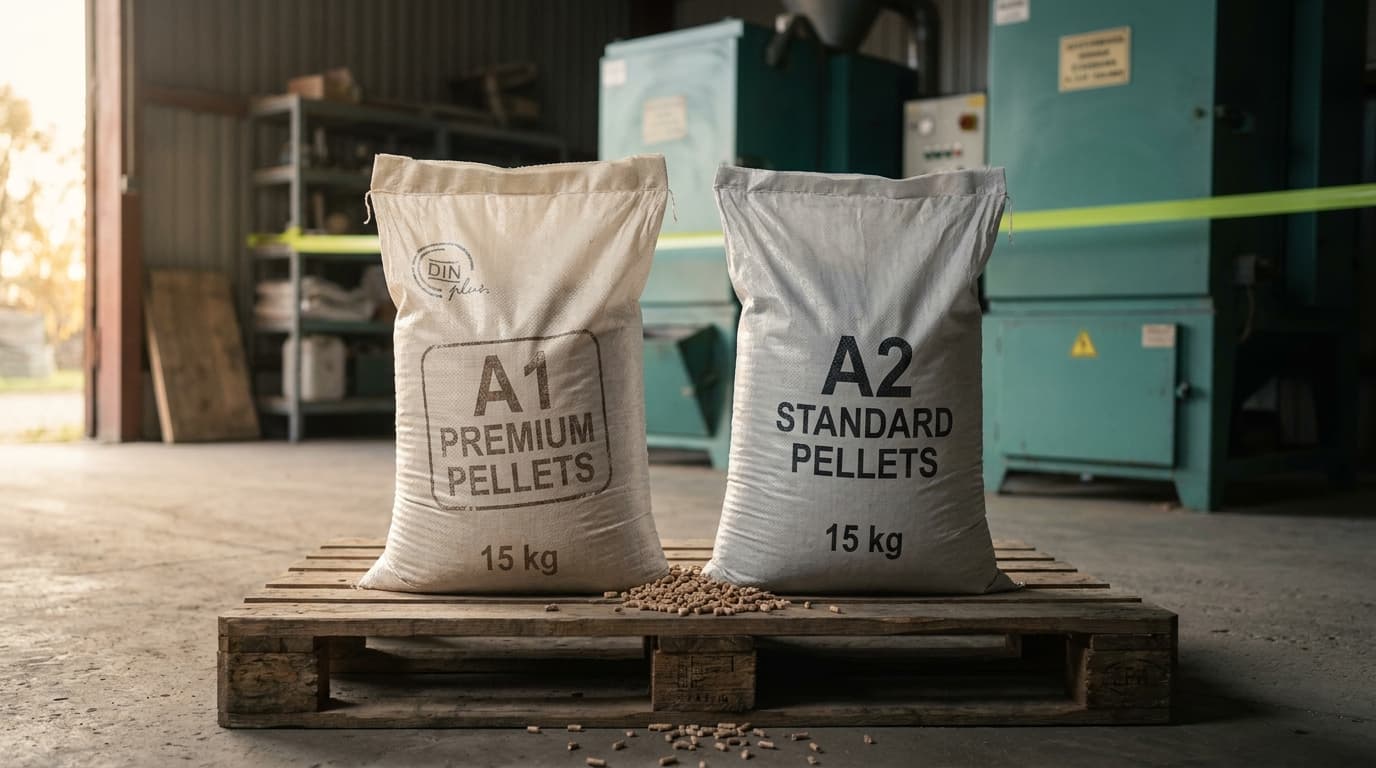
Prices are 20–30% above April. Availability tightens — suppliers have 80–90% of season volume already contracted and sell the rest at spot. A heating plant without contracts in late September has a real problem — bulk A2 pellet may need replacement with more expensive sacked A1 because bulk A2 is sold out.
Recommendation: avoid this window. If you must — buy small short-dated lots and start looking for a long-term deal for the next season.
What a GFT contract looks like
For a municipal heating plant (4 000 t bulk A2 pellet + 12 000 t sawmill chips + 3 000 t PKS) in season 2026/2027 the typical structure:
- Framework agreement on 20 pages: fuel parameters, weekly schedule, KZR, documentation, payment terms (14 days from delivery), quality-guarantee terms (permitted parameter deviations, claims procedure), force majeure, governing law (Polish), jurisdiction (Toruń, GFT's registered seat).
- Price annex for the season: base price per fuel, indexation clause if any (rare in Poland — usually a fixed seasonal price), transport cost included in the CIF-customer-warehouse price.
- Schedule annex: weekly plan October–April, unloading window ±2 days. The customer may shift a delivery ±3 days by email 72 h before the planned date.
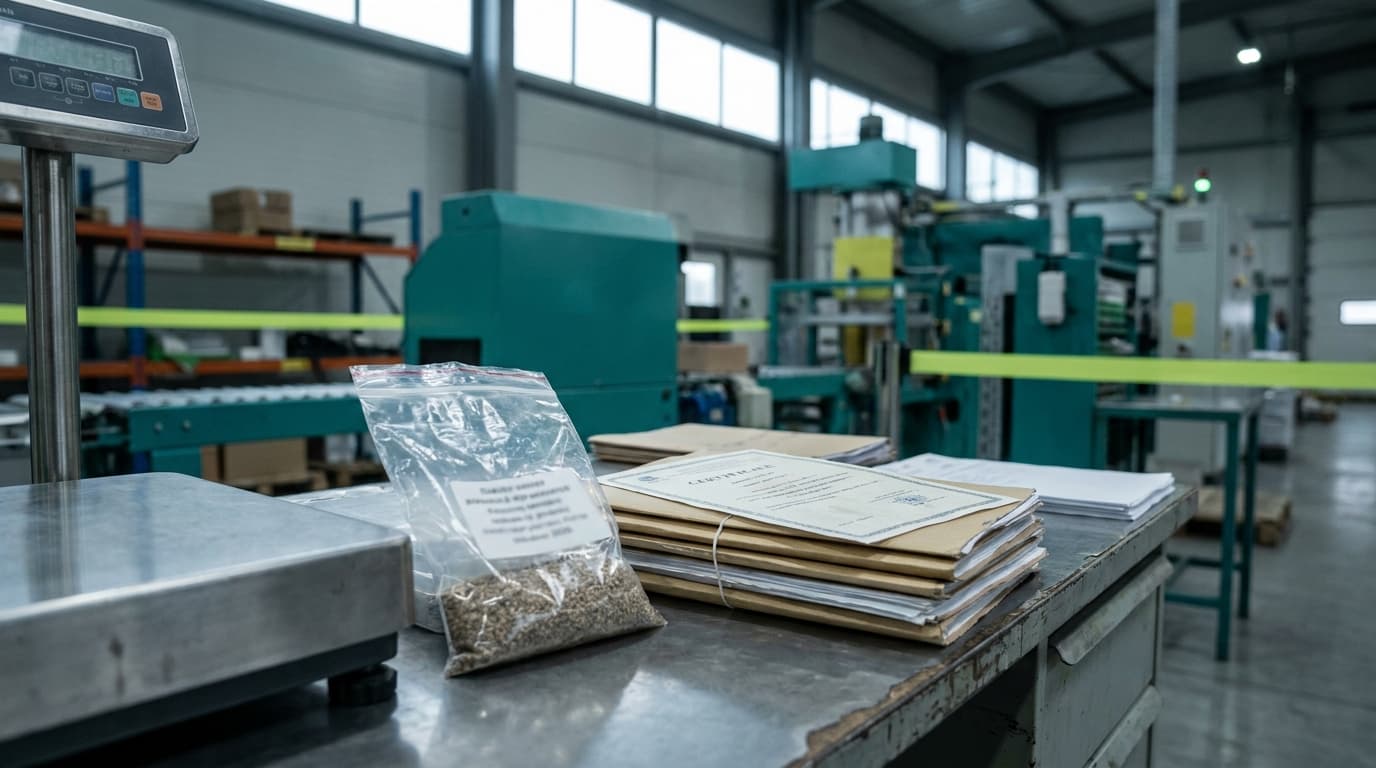
- Documentation annex: what ships with every batch (KZR, quality certificate, weighing, emissions declaration).
Three common mistakes in seasonal procurement
1. Waiting for "a better price in September"
In Polish district heating, mid-year prices do not fall — they climb. September is always more expensive than April. Waiting until September is a weather lottery — if the previous season was mild and supplier inventories are large, September prices sting less; if the previous season was sharp, September hurts.
2. Signing with too few suppliers
A customer with one supplier for 100% of demand is exposed: if the supplier hits a warehouse outage in mid-January, the plant stops. Standard diversification is 60/40 (main + backup) or 50/30/20 (three suppliers).
3. Skimping on buffer storage
A customer taking JIT deliveries with a 3-day buffer is exposed to every logistics disruption (snowstorm, frozen roads, wagon failure). Standard buffer is 14–21 days of stock at the customer's warehouse.
FAQ
Can I contract half the season (October–December) and try the second half at spot? You can, but it is expensive. First-half price will be 5–8% above a full-season contract (supplier's risk is split), and the second half (January–April) will be at spot prices which are typically 10–20% above the seasonal base.
Does the supplier guarantee quality? Standard yes — the annual contract includes a clause on batch parameters within agreed ranges (calorific value, ash, moisture, chlorides). Larger deviations → claim, and the supplier either discounts the batch by 10–15% or ships a replacement batch at its own cost.
What if the customer wants to change the fuel type mid-season? Rare, but it happens (boiler shifted to a higher PKS share, or the customer wins subsidised funding and grows volume). Our framework agreement carries an adaptation clause — a fuel-type change requires a mutual agreement and a signed annex.
Summary
April is the best-price window. July is +8–15%. October is a lottery. It is the simple truth of the Polish biomass market, known to anyone who has been buying fuel for five years.
Green Fuel Trading opens contracting for season 2027/2028 in April 2027. Reserving volume in that window = a safe base price for the next heating-plant cycle. Talk to us — our buyers see the market at the sawmills, at the pellet mills and at the PKS importers. We can prepare a portfolio recommendation matched to your boiler's parameters within five business days.