A1 vs A2 wood pellet — which one for season 2026/2027
A1 is premium for municipal heating and fuel yards. A2 is the cost-effective volume floor for district heating and industry. Concrete selection criteria by boiler type and emission requirements.
The core difference under EN ISO 17225-2
EN ISO 17225-2 defines the wood pellet classes. Two matter to the Polish B2B market: A1 and A2.
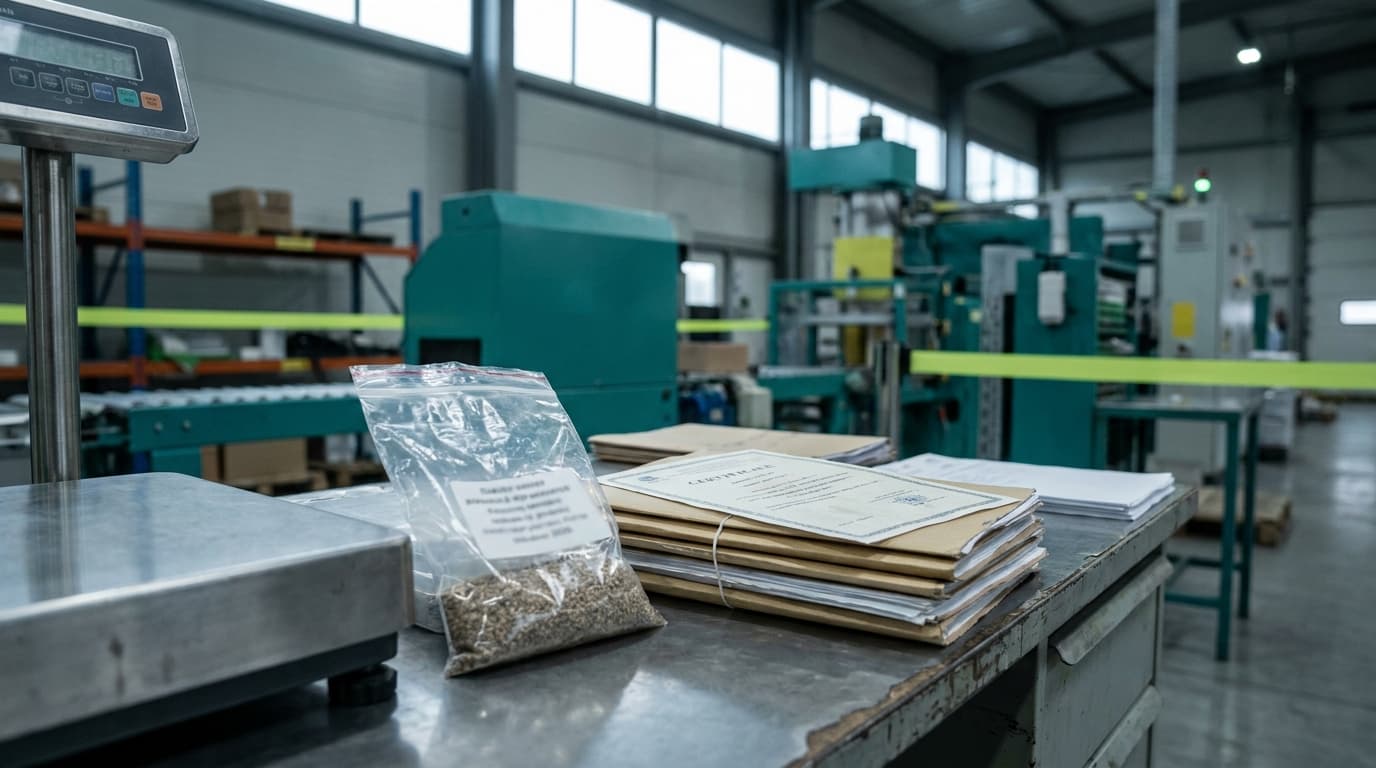
A1 pellet — from clean softwood. Calorific value ≥ 4.8 kWh/kg (≥ 17.2 MJ/kg). Ash ≤ 0.7%. Moisture ≤ 10%. Mechanical durability ≥ 97.5% (doesn't crumble in transit). DINplus certificate as a producer-side quality guarantee.
A2 pellet — from softwood with allowed hardwood admixture, sawmill by-products (not just clean roundwood). Calorific value ≥ 4.7 kWh/kg. Ash ≤ 1.2%. Moisture ≤ 10%. Durability ≥ 97.5%.
The technical difference reduces to one dominant parameter: ash (0.7% vs 1.2%). That drives price and boiler selection.
Price and volume — where the gap sits
Season 2026/2027 prices (October 2026, CIF customer warehouse in Poland):
- A1 bulk tanker: 1,050–1,180 PLN/t net
- A1 15 kg sacks: 1,200–1,340 PLN/t net (sack + pallet + granular logistics)
- A1 1,000 kg big bag: 1,090–1,220 PLN/t net
- A2 bulk tanker: 890–990 PLN/t net
- A2 1,000 kg big bag: 930–1,030 PLN/t net
- A2 bulk rail wagon: 850–950 PLN/t net (lowest unit cost for large buyers)
Price gap ~15–20% A2 vs A1. For a 6 MW municipal heating plant burning 4,000 t of pellet a year: shifting A1 → A2 saves roughly 640,000 PLN annually on fuel. Only if the boiler handles 1.2% ash.
Criterion 1: boiler design
Manual ash removal (installations ≤ 1 MW, retail fuel yards, households) → A1. Reason: 1.2% ash with A2 means twice as often emptying the ash pan versus 0.7% A1. Operationally painful.
Automatic ash removal and de-slagging system (district heating, CHP, industrial plants) → A2 works without complaint. Automated systems, higher ash just means more frequent removal cycles (no additional labour).
BFB/CFB fluidised-bed boilers → A2 is the factory-default fuel. Fluidised beds welcome higher mineral content (sand, ash) — helps hold the bed. A1 in a fluidised bed is unjustified premium spend.
Criterion 2: emission requirements
Higher ash in A2 means:
- Particulate emissions (PM10, PM2.5) roughly 35% higher for A2 vs A1. If an electrostatic or bag filter runs near capacity, A2 may breach limits.
- NOx — practically identical between A1 and A2 (nitrogen comes mostly from the wood, both similar).
- SOx — negligible for both (wood is very low sulphur).
Practice: municipal plant with an integrated permit (IPPC) and BAT-AEL limits on PM10 under 25 mg/Nm³ — verify A2 does not breach. A plant without strict limits (older, lighter regime) — A2 is fine.
Criterion 3: delivery and storage
Pneumatic tanker to silo → both work. Silo pneumatic transport requires high mechanical durability (no crumbling in the pipe). Both A1 and A2 meet ≥ 97.5%.
Rail wagon → practically always A2 (economics — wagon pays off on large volumes, cheaper to buy, cheaper to move).
Big bag on pallets → both; A2 more common in industry (single bag = 1,000 kg, forklift-friendly), A1 still popular for plants with smaller silos or fuel yards.
15 kg sack → A1 only. A2 in sacks makes no economic sense (sack + granular logistics erases the price saving).
Criterion 4: raw-material origin — KZR implication
Standard A1 usually comes from softwood roundwood (spruce, pine) certified PEFC/FSC. GHG emissions declared for A1 in KZR: 12–16 kg CO2 eq/GJ.
A2 usually comes from sawmills (mill residues — no tree cut specifically for pellet production) plus lower-grade wood. GHG emissions declared for A2 in KZR: 8–12 kg CO2 eq/GJ.
A surprise for many: A2 often has lower GHG emissions than A1 despite the "lower class" label. Reason: smaller feedstock footprint.
For a customer counting RES share in district heating — lower declared emissions mean a higher RES share for the same tonne burned. A2 can win not only on price but also on RES accounting.
GFT recommendation by segment
Retail fuel yard: A1 15 kg sacks. End customer expects A1 (quality brand); A2 does not sell in this segment.
Municipal heating 3–10 MW with automatic ash system: A2 bulk tanker or A2 big bag. 15–20% saving vs A1 at the same production stability.
CHP plant with electrostatic filter: A2 bulk rail wagon. Best economics of scale. Ash is not an issue — the ESP catches it.
Industrial plant with process boiler: A1 or A2 depending on boiler tolerance. Usually A2 is enough. A1 if the process is critical (e.g., drying in food processing where thermal fluctuations are costly).
Fluidised-bed boiler in utility power: A2 with full KZR and per-batch GHG measurement. Mix A2 + PKS + sunflower if the boiler tolerates it.
Three common procurement mistakes
1. Buying A1 where A2 suffices
Municipal plant with a modern BFB buying 15 kg A1 sacks "because the boiler is premium and deserves premium fuel" — 20% of the annual fuel budget wasted. The BFB will burn A2 bulk without issue; the ash goes into the system.
2. Buying A2 where A1 is essential
Retail yard or communal boiler room with manual ash removal and untrained operators — A2 creates real operational pain. Operators empty ash twice as often, the pan overflows between shifts, ash backs up into the boiler.
3. Not mixing A1 and A2 in one framework contract
Many customers buy either A1 or A2. Rationally you can carry both: A1 for retail sacks (if the plant sells pellet locally) + A2 bulk for own heat production. One supplier, two products, one contract, two invoices.
FAQ
Is Polish A1 pellet better than Baltic A1? No systemic difference. Poland has strong A1 pellet production (100–200 kt/year plants). The Baltic states (LT, LV, EE) too. DINplus + KZR + a delivery test = same quality. Poland wins on logistics (shorter transport, lower CIF cost).
Storage life? A1 in a moisture-protected silo: 12–18 months without parameter loss. In a big bag under cover: 12 months. Foiled 15 kg sacks: 18 months. Same for A2.
Can I switch a boiler from A1 to A2 without modifications? In a boiler designed for pellet — yes. Only ash-removal frequency needs to go up (proportional to higher ash share).
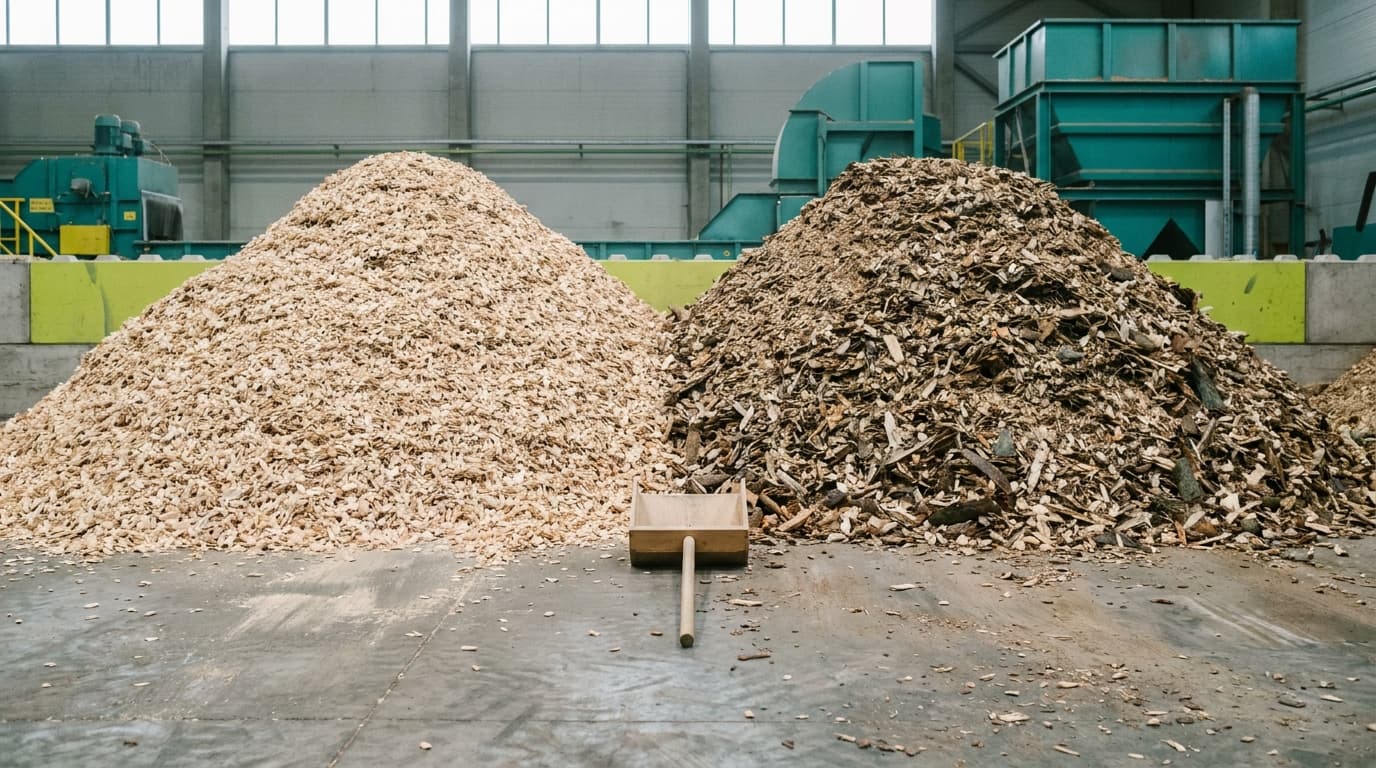
"White" vs "brown" pellet? "White" (light) pellet = wood core, no bark → A1. "Brown" (darker) = with bark admixture → A2. Colour is a natural first-glance quality tell.
Summary
A1 vs A2 is a trade between operational simplicity and economics. Key question: is the boiler ready for higher ash, and does the emissions permit allow the higher particulate load of A2.
Green Fuel Trading delivers both grades in bulk, big bag and 15 kg sack. For plants weighing an A1 → A2 shift we offer a 30-day operational test: we deliver A2 for one boiler cycle and monitor with your operations team. Based on the test we set the target proportion for the season.
Contact the GFT team — the test is free for prospects considering a seasonal contract from 2,000 t of pellet.