
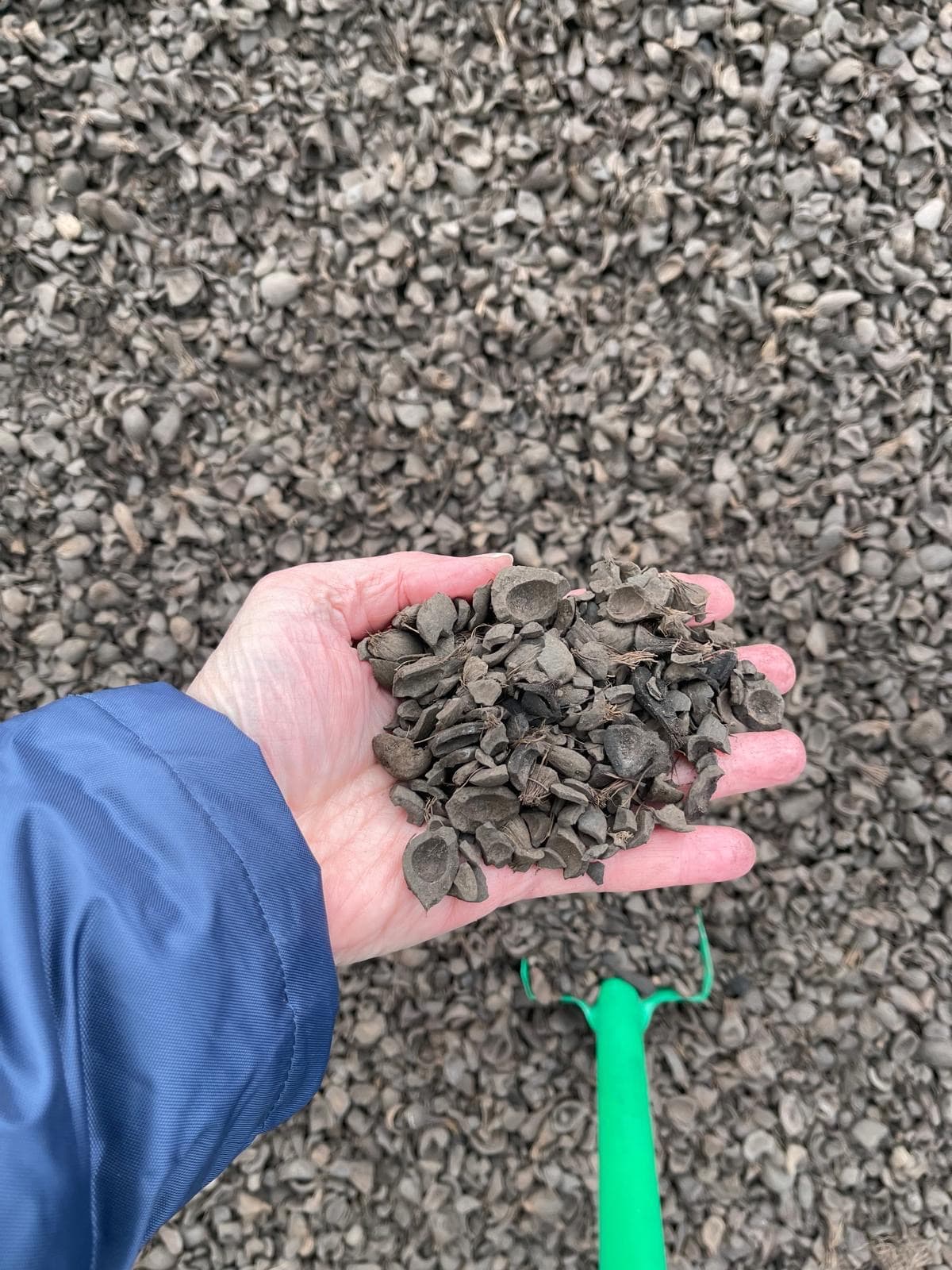
What palm kernel shells are and where PKS biomass comes from
The trade name is Palm Kernel Shell, and Polish buyers use several terms for it. All of them describe the same material: the hard shell around the oil palm seed, left after the oil has been recovered.
We source the cargo from Indonesia and West Africa. The shell is naturally dry, dense and resistant to breaking down during transhipment, so it survives sea freight and port storage without losing its parameters. It behaves in a feeder much like coarse wood chips rather than a fine material such as sawdust.
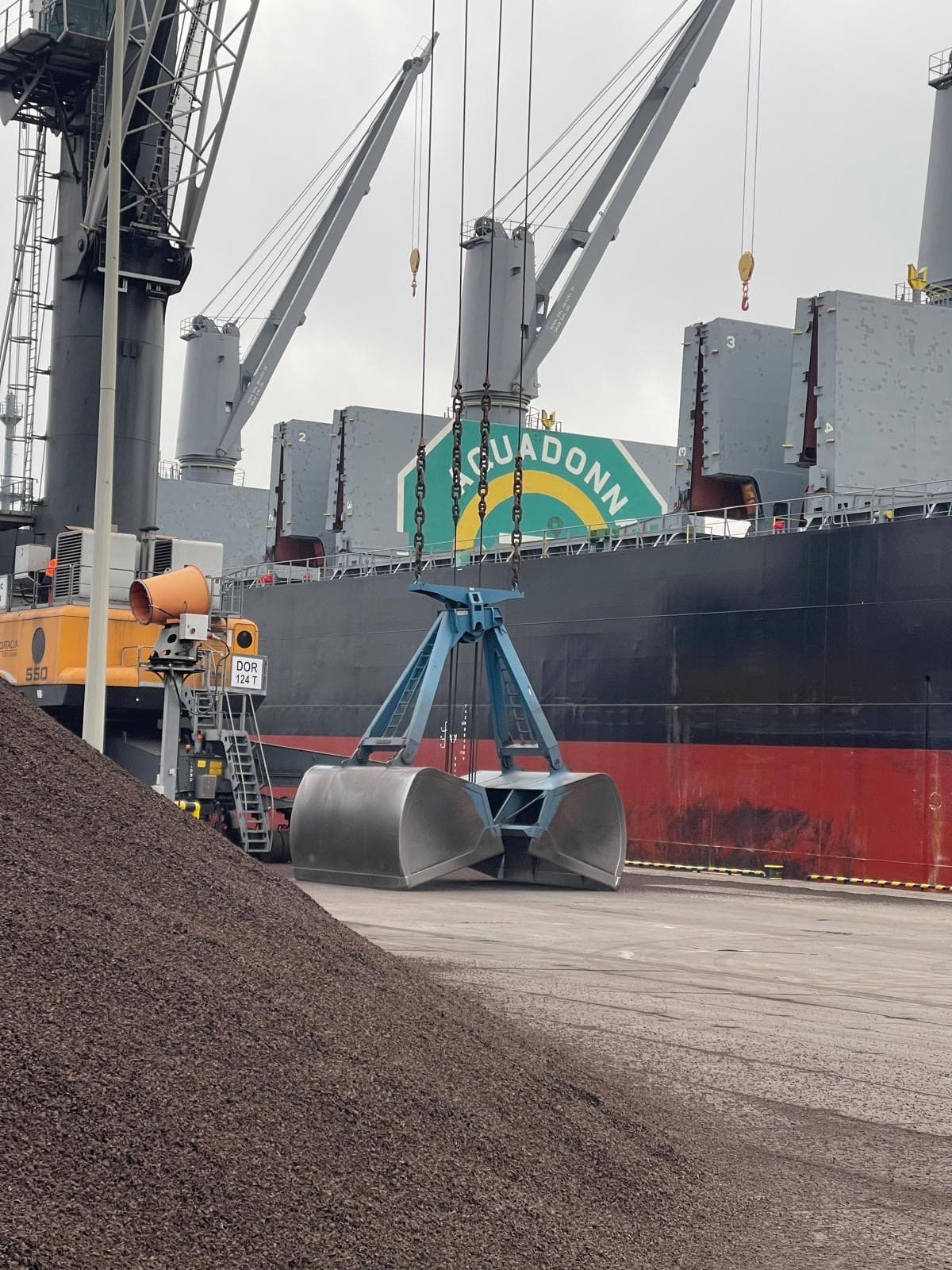
Photos of the cargo
Fuel parameters: calorific value, ash, moisture
A calorific value of 18-21 MJ/kg places palm kernel shells above typical wood chips and close to wood pellet. Moisture below 15% means the fuel needs no drying before firing. Ash at 3-5% is markedly higher than in A1 pellet, so plan for more frequent ash removal and check that your de-ashing system can handle the volume.
Every batch ships with a test certificate for that specific delivery. If your plant has limits on chlorine or potassium, we will send those figures from the current report before any contract, so you can assess corrosion and slagging risk on your own assumptions rather than on catalogue values.
| Calorific value | 18-21 MJ/kg |
| Ash content | 3-5% |
| Moisture | up to 15% |
| Origin | Indonesia, West Africa |
| Certification | KZR, ISPO, RSPO |
| Sold as | bulk, from Gdansk |
| Minimum order | 25 tonnes |
How much PKS do you need
Enter the tonnage or your annual energy demand — we convert one into the other and show the number of loads and the ash left to remove.
Based on 19.5 MJ/kg and 4% ash. Boiler efficiency is not included — these are fuel figures, not delivered heat.
PKS as a wood pellet substitute
Palm kernel shells are usually weighed against wood pellet, and that is how we position them. At 18-21 MJ/kg you get comparable energy per tonne and pay less for that tonne. For a plant burning several thousand tonnes a season, the difference in cost per unit of energy is too large to ignore.
The swap is not one-for-one and we will not pretend otherwise. Higher ash, different bulk density and a different particle shape all affect the feeder, the de-ashing cycle and combustion temperature. In practice most plants co-fire, blending shells with pellet or chips at a share that suits the boiler. If this fuel is new to you, start with one trial batch and measure how the installation behaves before committing to regular deliveries.
A note on naming, because it causes confusion: the term "PKS pellet" usually refers to granules pressed from milled shell. We sell the shell in its natural form, not pelletised, and describe it that way in the paperwork.
Tell us which grade and how many tonnes you need — we will check availability and name the collection point.
Origin, certification and sustainability — answered directly
The sustainability question comes up in nearly every conversation and it is a fair one. Oil palm has a poor reputation in Europe, and a purchasing department answerable to its board and its auditor needs to know what it is buying. So we address it openly rather than work around it.
Our cargo falls under the KZR system, and our suppliers hold ISPO and RSPO certificates. KZR confirms sustainability criteria across the supply chain and is the document you cite when accounting for the fuel as biomass. ISPO and RSPO cover the plantation itself. We hand over the full set with every batch and share it at the enquiry stage, before any order.
The shell is not the purpose of the plantation and is not grown for the energy industry. It is what remains after the oil is pressed — a residue stream the mill has to deal with. Buying it does not expand planted area; it gives value to material that arises anyway.
How this fuel compares with the rest
Chips and PKS are shown at mid-range, as they vary by batch. The A1 and coal figures come from test reports for specific deliveries.
Who we sell palm kernel shells to
We sell PKS biomass to institutional and industrial buyers: municipal heating plants cutting the cost per gigajoule and meeting biomass-share obligations, CHP plants co-firing where stable calorific value matters, industrial sites with their own process boilers, and fuel yards reselling to smaller installations in their region.
The minimum order is 25 tonnes, one vehicle. We do not sell in bags or in household quantities — this fuel is not intended for domestic boilers.
Collection from the port and delivery to your site
You collect the cargo yourself from the Port of Gdansk — we sell on FCA terms. Palm kernel shells move in bulk in bathtub or boat-type trailers built for dense free-flowing material, discharging by gravity. One trailer carries about 25 tonnes. Transport is priced by road distance from the port and shown as a separate line, so you can see the split between goods and delivery.
Before the first delivery we agree unloading conditions on your yard, because gravity discharge needs access, firm ground and clearance to raise the trailer. We notify slots in advance and confirm them before the vehicle departs.
What FCA means and how it differs from DAPAnnual contracts for utility-scale buyers
For buyers needing 10,000 tonnes a year or more we sign annual contracts: a delivery schedule for the whole heating season, secured volume on your side and a pricing formula that takes part of the market risk off you. For us it is the basis to plan imports well ahead; for you, certainty that the fuel is on the yard in January rather than still in a quotation.
We start from your consumption forecast, boiler parameters and whatever your permit and biomass accounting system require of the fuel. On that basis we prepare terms and put them up for negotiation.
Frequently asked questions
What is PKS biomass?
PKS biomass is the palm kernel shell — a solid fuel arising as a residue when oil is pressed from oil palm seeds. The abbreviation comes from the trade name Palm Kernel Shell.
What is the calorific value of palm kernel shells?
Palm kernel shells deliver 18-21 MJ/kg, close to wood pellet and well above wood chips. Ash sits between 3 and 5%, moisture stays below 15%. Each batch comes with a test certificate for that delivery.
Where can I buy PKS biomass in Poland?
We release cargo from the Port of Gdansk, so you buy on domestic terms, in zloty and with a Polish invoice, with no import or customs clearance of your own. Send an enquiry through the form on this page or call us directly.
Can PKS replace wood pellet in my boiler?
The calorific values are close, so a switch is possible, but check the installation first. Shells leave more ash than A1 pellet and have a different particle shape, which affects the feeder and the de-ashing cycle. Start with a trial batch or with co-firing.
Are palm kernel shells a sustainable fuel?
Our cargo falls under the KZR system and our suppliers hold ISPO and RSPO certificates covering how the raw material is obtained. The shell is a residue, not the purpose of the plantation, so buying it does not expand planted area.
What is the minimum order and how do you deliver?
The minimum is 25 tonnes, one vehicle. You collect from the Port of Gdansk on FCA terms. The shells move in bulk in bathtub or boat-type trailers with gravity discharge. For orders above 1,000 tonnes we can help arrange haulage, agreed case by case.