
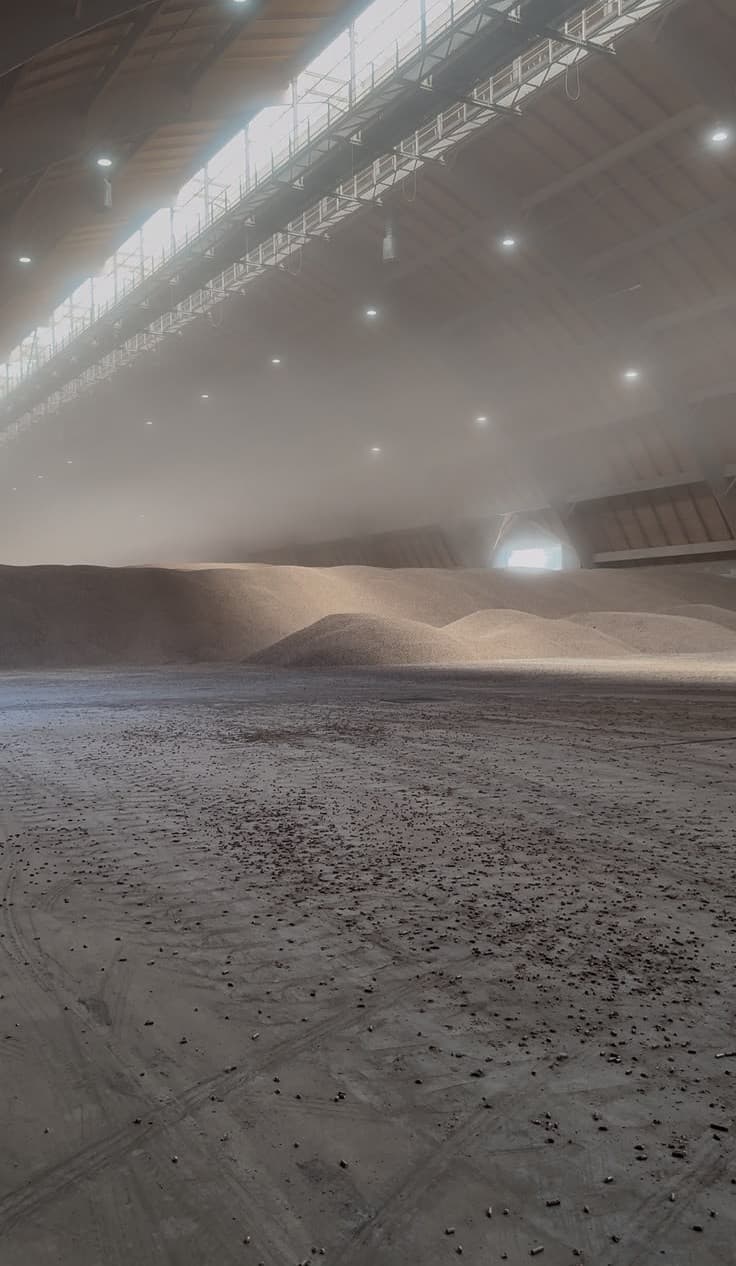
What class A2 means in wood pellet
The A2 designation comes from PN-EN ISO 17225-2, which grades wood pellet by raw material and by permitted ash, moisture and durability. Class A2 allows a higher bark share, so the finished fuel leaves more ash than A1 at a very similar calorific value.
In practice this is a deliberate trade-off: you give up the lowest ash figure and in return get the same useful energy per tonne on better commercial terms. It works wherever the installation was designed for industrial fuel and de-ashing is not an operational problem.
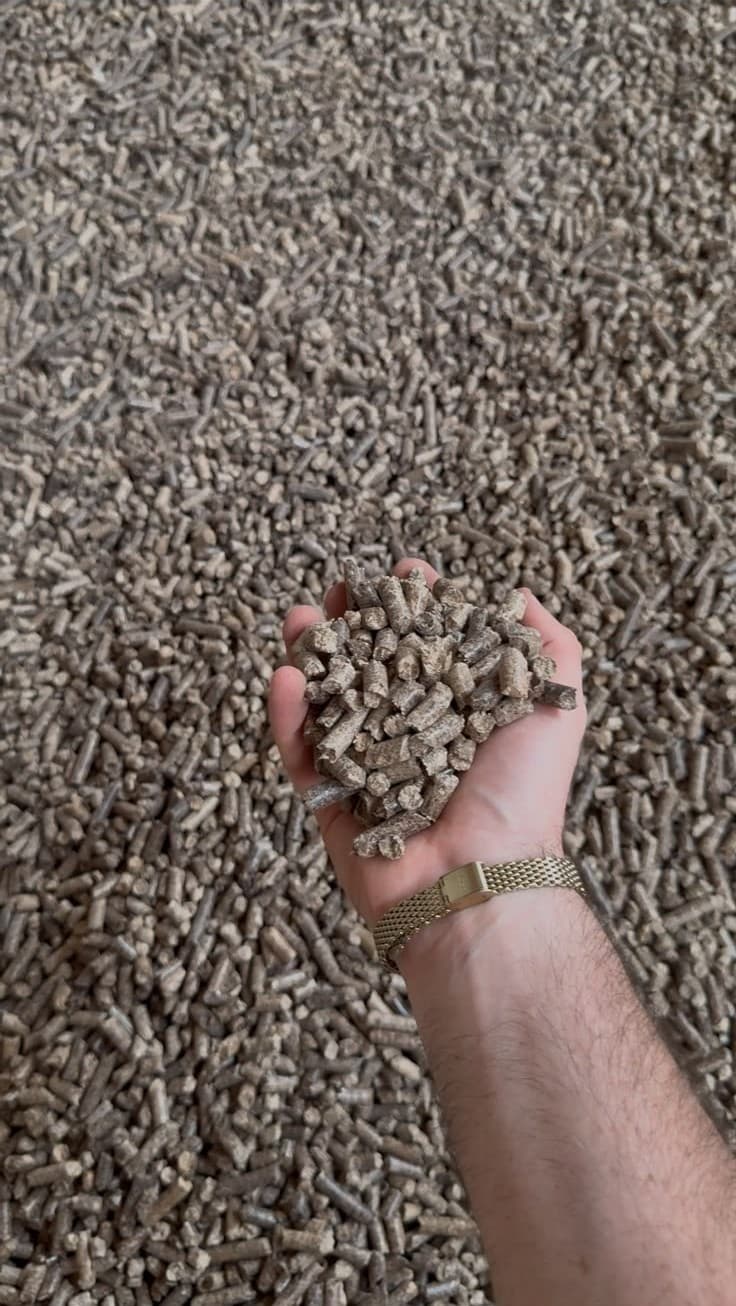
Photos of the cargo
The parameters we guarantee in class A2
A calorific value of 17.5 MJ/kg equals roughly 4.86 MWh per tonne. Durability of 97.5% means the fuel survives handling without breaking down, so the feeder runs steadily and fines do not build up in the store. Lengths of 3 to 40 mm sit within the range typical screw feeders handle.
| Raw material | softwood, higher bark share |
| Diameter | 6-8 mm |
| Pellet length | 3-40 mm |
| Calorific value | min. 17.5 MJ/kg |
| Moisture | max. 10% |
| Ash content | max. 1.2% |
| Mechanical durability | min. 97.5% |
| Compliance | PN-EN ISO 17225-2 A2 |
How much A2 pellet do you need
Enter the tonnage or your annual energy demand — we convert one into the other and show the number of loads and the ash left to remove.
Based on 17.5 MJ/kg and 1.2% ash. Boiler efficiency is not included — these are fuel figures, not delivered heat.
A2 or A1 — where the cost really differs
The difference in energy per tonne is under two percent, so it is not what decides the class. The real difference is ash: a tonne of A2 can leave up to eight times more residue than a tonne of A1. Before choosing, work out how often the de-asher must be emptied in a season and how many hours of labour that takes.
| Ash — A2 | up to 1.2% (up to 12 kg/t) |
| Ash — A1 | 0.15% (approx. 1.5 kg/t) |
| Calorific value — A2 / A1 | from 17.5 / 17.82 MJ/kg |
| Moisture — A2 / A1 | up to 10% / 5.06% |
| Durability — A2 / A1 | from 97.5% / 98.8% |
Tell us which grade and how many tonnes you need — we will check availability and name the collection point.
Which installations A2 suits best
We direct A2 pellet to boilers and burners built for industrial fuel — those whose documentation permits ash above one percent. It performs well with automatic de-ashing and where technical staff are on site around the clock.
We do not recommend it for small boilers specified for A1, because higher ash speeds up fouling of the exchanger and can cause clinkering on the grate. If you are unsure which class your installation allows, check the manual before ordering — or go through it with us.
How this fuel compares with the rest
Chips and PKS are shown at mid-range, as they vary by batch. The A1 and coal figures come from test reports for specific deliveries.
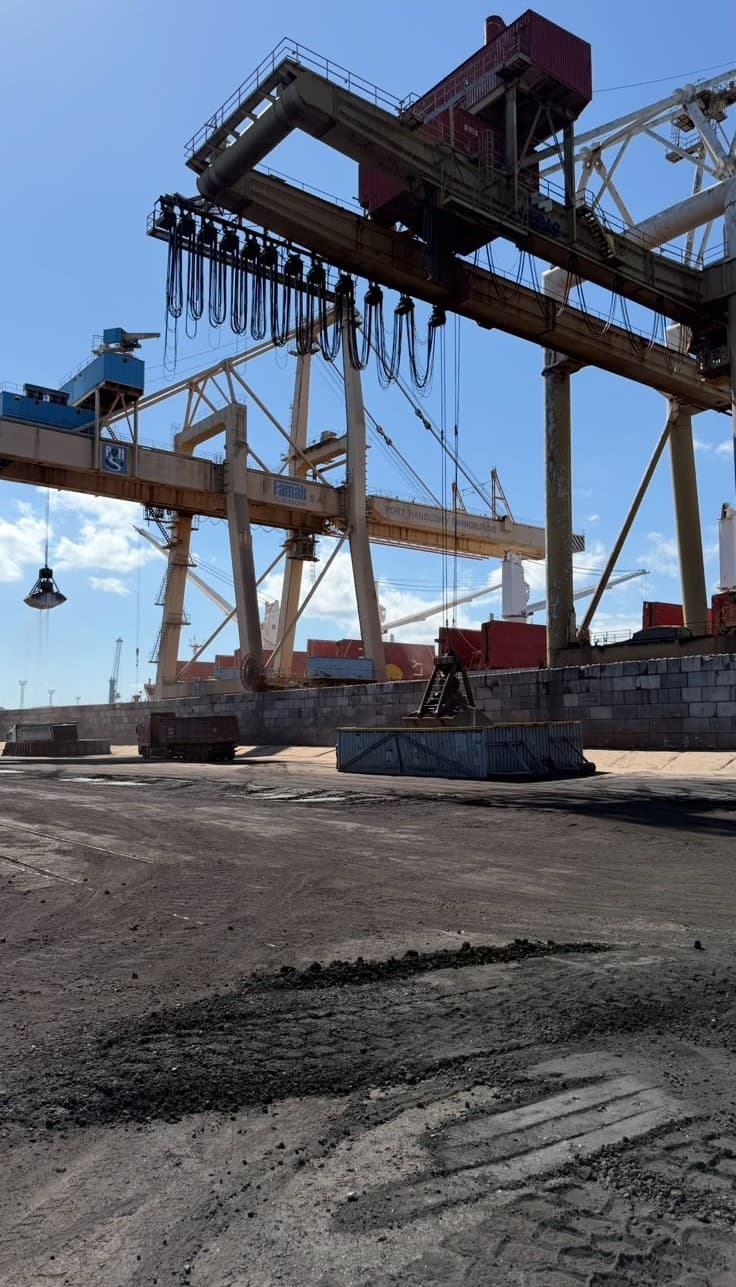
Where the current cargo comes from
The A2 pellet we currently hold arrived in Swinoujscie, where the vessel was discharged. It is one specific batch, so we confirm availability at the time of enquiry and do not promise deliveries from future voyages until they are contracted.
How an A2 order runs
We start from two things: how many tonnes you need and when. On that basis we quote the price and confirm availability, then set a date and a loading slot. For larger volumes we build a release schedule so the fuel arrives as you need it rather than filling your yard at once.
Frequently asked questions
What does the A2 designation mean?
It is a quality class from PN-EN ISO 17225-2. Class A2 allows a higher bark share than A1, so the fuel leaves more ash — up to 1.2% instead of 0.15%. The calorific value stays very similar, so A2 is treated as industrial fuel rather than inferior fuel.
What is the price of A2 pellet per tonne?
We quote individually, because it depends on order size and road distance to the delivery point. Send us the planned volume and the unloading address and we will quote the goods together with transport, with nothing hidden.
Is A2 pellet suitable for a domestic boiler?
Usually not. Small boilers are generally specified for A1, and the higher ash in A2 speeds up fouling and raises the risk of clinkering. Check the manual for the class your manufacturer permits before ordering.
How much ash is left from a tonne of A2?
The standard allows up to 1.2% ash, which is at most twelve kilograms of residue per tonne. For comparison, A1 at 0.15% leaves about one and a half kilograms. Translate that difference into de-ashing frequency in your own installation.
Can A2 pellet be bought in bags?
No. A2 is sold in bulk only, on FCA terms. We do not sell it in bags or big bags, because this fuel goes to buyers with mechanical unloading.
How do running costs differ between A2 and A1?
Energy per tonne differs by under two percent, so fuel cost per megawatt-hour is close. The difference is in labour: more ash means more frequent de-ashing. With automatic de-ashing that cost is small and A2 comes out better.
Is the cargo available immediately?
We hold one batch that arrived in Swinoujscie, so we confirm availability at the time of enquiry. We do not reserve volume without agreed terms and do not promise cargo from future voyages until contracted.